How to Design Parking Lot Layouts That Maximize Capacity
Optimizing your asphalt real estate is more than just drawing lines; it is about engineering efficiency and accessibility.
For property owners and commercial developers, every square foot of asphalt counts. Whether you manage a retail center in a bustling hub or a private corporate campus, the efficiency of your parking lot directly impacts customer satisfaction and operational flow. A poorly designed lot leads to congestion, frustrated drivers, and wasted space. Conversely, a well-engineered layout can increase your total vehicle count without expanding your physical footprint.
At Capital Parking Lot Line Painting, we have seen firsthand how a strategic approach to design and high-quality line marking can transform a struggling lot into a high-performance asset. In growing areas like Barrie, where urban density is increasing, maximizing existing space is a top priority for local businesses.
The Core Elements of High-Capacity Design
Maximizing capacity is a balancing act between density and maneuverability. If you pack stalls too tightly, drivers will struggle to enter and exit, leading to property damage and long queues. If you leave too much space, you are leaving money on the table.
1. Choosing the Right Stall Angle
One of the most significant decisions in layout design is the angle of the parking stalls. There are three primary options:
- 90-Degree Parking: This is the gold standard for maximum density. It allows for the most stalls per linear foot but requires wider drive aisles to allow vehicles to turn into the spaces.
- 60-Degree Angled Parking: This offers a middle ground. It facilitates easier entry and exit, making it ideal for high-turnover areas, though it may require more total area.
- 45-Degree Angled Parking: Best for narrow lots or one-way traffic patterns. While it uses more space per stall, it provides the easiest access for drivers.
2. Drive Aisle Optimization
The aisles are the arteries of your parking lot. For 90-degree stalls, you need two-way traffic aisles, which must be wide enough to accommodate large SUVs and delivery trucks. For angled parking, one-way aisles can significantly reduce the width required, potentially allowing you to squeeze in extra rows of parking.
Common Mistakes That Waste Space
Many property managers fall into traps that inadvertently shrink their usable capacity. Avoiding these pitfalls is essential for maintaining a profitable lot.
Ignoring ADA Compliance
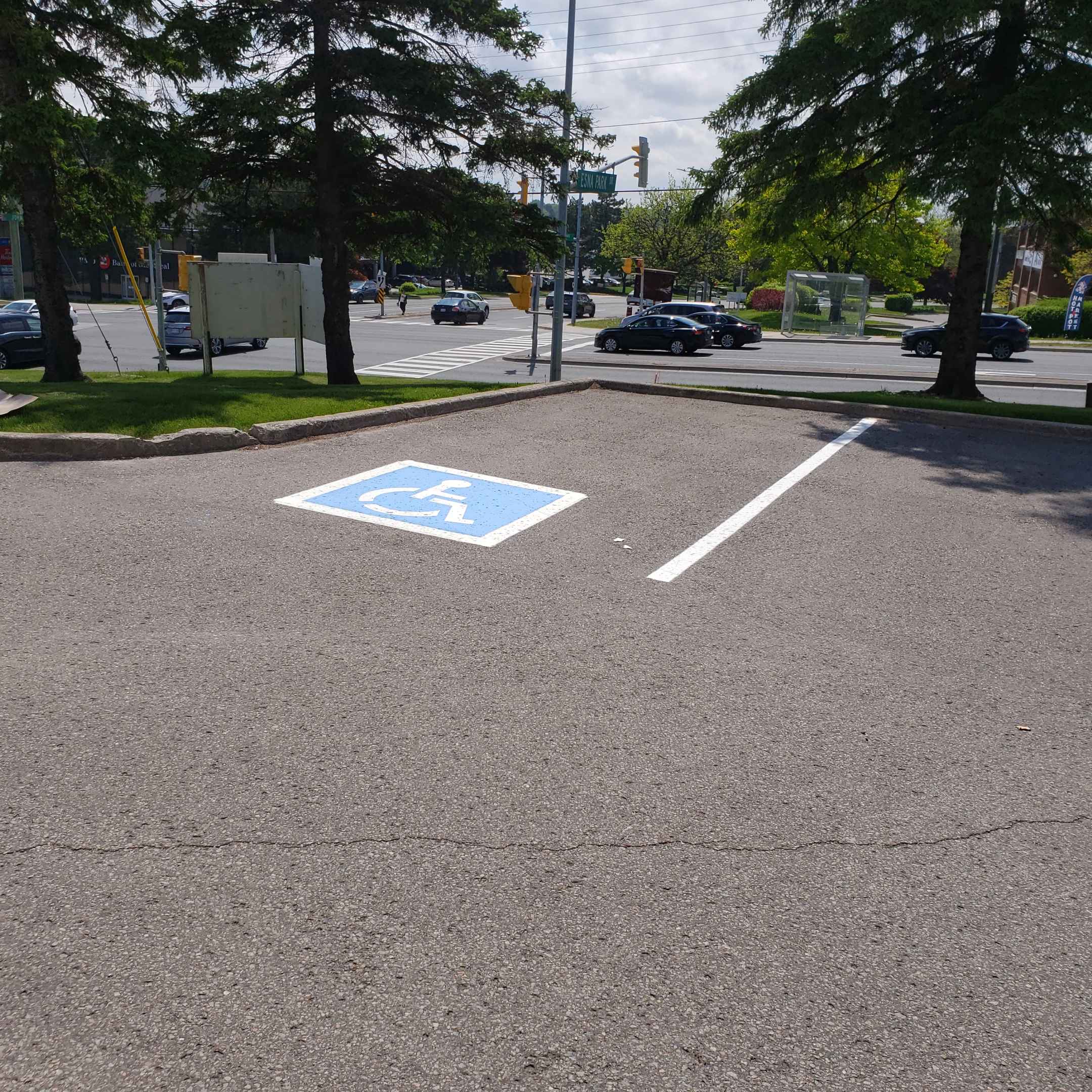
Failing to properly integrate accessible spaces can lead to legal issues and inefficient flow. Proper planning ensures these spaces are placed where they are most useful without disrupting the main traffic rhythm.
Poor Line Marking Maintenance
Faded or crooked lines lead to "lazy parking," where drivers take up more than one spot. Regular professional line marking ensures drivers stay within their boundaries, preserving every inch of space.
The Role of Professional Line Marking
Design is only half the battle. Once the layout is engineered, the execution of the line marking is what brings the plan to life. Precision is non-negotiable. If your lines are even a few inches off, the cumulative effect over a large lot can result in several lost parking spaces.
Capital Parking Lot Line Painting specializes in high-precision application that ensures your layout is respected by every driver. In a top 30 city like Barrie, where commercial competition is high, a clean, well-marked lot signals professionalism and care to your customers.
Summary Checklist for Capacity Optimization
- Evaluate stall angles (90° vs angled) based on aisle width.
- Implement one-way traffic patterns to narrow aisle requirements.
- Ensure clear signage and high-contrast line marking.
- Schedule regular maintenance with Capital Parking Lot Line Painting to prevent space creep.